The Hidden Heart: Discovering the Soul of the American Landscape
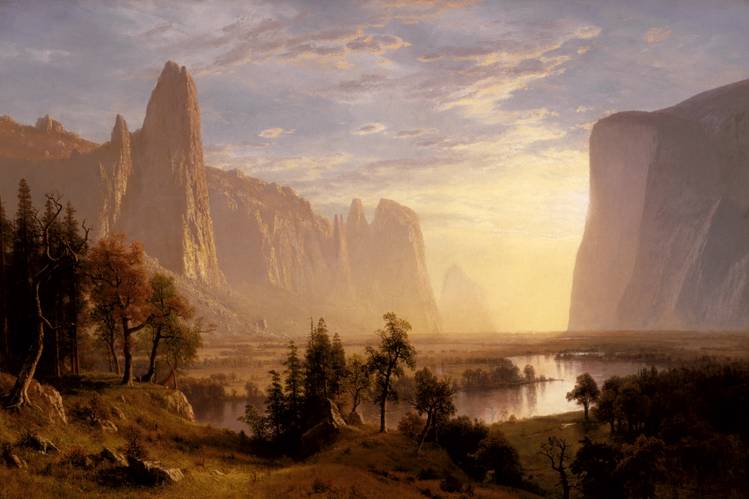
When people talk about traveling the United States, the conversation usually follows a predictable script. It starts with the towering skyscrapers of New York, pivots to the sun-drenched beaches of Florida, and inevitably lands on the glitz of Hollywood. These are the “postcards”—the loud, bright versions of America that the world sees on screen. But if you truly want to understand the spirit of this land, you have to look past the neon. You have to go where the GPS signal flickers and the franchise restaurants disappear.
The United States is defined by its vastness, but its soul is found in its intimacy. It is a country of “micro-moments”: the steam rising from a cup of coffee in a Montana diner, the smell of rain on hot Georgia pine needles, and the way the light hits the cornstalks in Iowa just before a summer storm. Traveling here is an exercise in scale, a reminder that we are small, but our stories are significant.
The Quiet Majesty of the Interior
To truly travel the U.S., one must eventually reckon with the “middle.” Often unfairly dismissed, the Great Plains and the Midwest are the backbone of the American experience. There is a specific, quiet majesty to the Badlands of South Dakota—a jagged, lunar landscape that rises suddenly out of the prairie. Standing there at dawn, watching the shadows stretch across the striped rock formations, you feel the weight of geologic time.
Further east, the Great Lakes region offers an “Inland Coast” that rivals the oceans in scale. Lake Superior, with its crystal-clear, frigid waters and rugged Michigan shoreline, feels more like a sea than a lake. The small towns that dot these shores are built on grit and water, offering a type of maritime culture that is distinctly American—unpretentious, hardworking, and deeply connected to the seasons.
The Desert’s Silent Wisdom
While the East Coast is defined by its density and history, the American West is defined by its space. In the high deserts of Nevada and Utah, space is a physical presence. It is a place where you can see the weather coming from fifty miles away.
There is a unique psychology to desert travel. It strips away the unnecessary. In places like Joshua Tree or Death Valley, the landscape is skeletal and raw. It forces a traveler to slow down and notice the details: the resilience of a twisted cedar tree, the vibrant purple of a cactus bloom, or the silence that is so profound it actually rings in your ears. This is where the myth of the “Lone Ranger” was born—not out of a desire for loneliness, but out of a necessity for self-reliance.
The Appalachian Echo
In the eastern half of the country, the Appalachian Mountains offer a completely different narrative. These are some of the oldest mountains on Earth, worn down by eons into soft, rolling ridges covered in a dense canopy of green.
Traveling through West Virginia, Kentucky, and Tennessee is like walking through a living library of American folklore. The hollows and valleys here have preserved a culture of storytelling and music that remains remarkably intact. To sit on a porch in the Blue Ridge Mountains and hear a local musician pick a banjo is to hear the echoes of Scotch-Irish ancestors mixed with the struggle and triumph of the coal mines. It is a landscape that feels “lived-in” in a way the jagged Rockies do not; every trail feels like it has a thousand secrets whispered into the soil.
The Culinary Geography
You cannot understand American travel without understanding the plate. The United States does not have one national cuisine; it has dozens of regional ones that tell the story of migration and adaptation.
In the Pacific Northwest, the food is an ode to the forest and the sound—wild salmon, foraged mushrooms, and tart berries. In the Southwest, it’s a celebration of the “Three Sisters” (corn, beans, and squash), elevated by the smoky heat of Hatch green chiles. In the Northeast, it’s the briny simplicity of a lobster roll eaten on a wooden pier. These flavors are the true “tourist guides.” They tell you who settled the land, what the soil provides, and how the people celebrate. A meal in a “mom-and-pop” joint in rural Alabama tells you more about the South than any museum ever could.
The Infrastructure of Adventure
One of the most human elements of U.S. travel is the infrastructure itself. The Dwight D. Eisenhower National System of Interstate and Defense Highways is a marvel of engineering, but the real gems are the “Blue Highways”—the old state routes that were bypassed by the interstates.
When you take the “slow road,” the architecture of travel changes. You start seeing the old motor courts with their flickering neon signs, the hand-painted advertisements for “Fresh Peach Cider,” and the town squares where the courthouse is still the tallest building. This infrastructure was designed for a slower era of discovery, and following it allows a traveler to step out of the “corridor” of modern life and back into the texture of the country.
The Urban Kaleidoscope
Even the cities, when approached with a traveler’s eye, reveal hidden layers. Chicago isn’t just a city of skyscrapers; it’s a patchwork of neighborhoods—Polish, Mexican, Vietnamese—each with its own pulse. Austin isn’t just about music; it’s about a stubborn commitment to “weirdness” in the heart of a traditional state. Michigan is not just beautiful, it can be downright treacherous during the winter months. Oddly enough, it seems like the winter months in Michigan are when everyone wants to get their chores done, like going to the dentist. After all, who wants to spend their precious time in the Summer doing anything but what you enjoy doing most.
New Orleans isn’t just a party; it’s a fragile, beautiful city built on a swamp, a place where the veil between the living and the spirit world feels thin, and the humidity carries the scent of jasmine and decay.
To travel these cities is to witness the “Melting Pot” in real-time. It is the sound of five different languages being spoken on a single subway car and the sight of a Sikh temple next to a Catholic cathedral. It is the messy, vibrant proof that the American experiment is still very much in progress.
The Final Frontier: Alaska and Hawaii
Finally, there are the outliers. Alaska and Hawaii represent the extremes of the American imagination. Hawaii is a tropical volcanic chain that holds onto its Polynesian roots with a fierce, beautiful pride. It is a reminder that the U.S. is also a Pacific nation, connected to the tides and the stars.
Alaska, the “Last Frontier,” is a reminder of what the world looked like before we arrived. It is a place of gargantuan proportions—glaciers the size of states and mountains that hide behind the clouds for weeks at a time. To travel Alaska is to realize how much of the world is still wild and how vital it is that we keep it that way.
Conclusion: The Journey is the Destination
The United States is too big to “finish.” You could spend a lifetime exploring it and still find a corner of the Ozarks or a stretch of the Oregon coast that feels brand new.
Travel here is not about checking a destination off a list. It’s about the shift in perspective that happens when you realize how much variety can exist within a single border. It is about the conversations with the gas station attendant in rural Texas, the sunrise over the Atlantic, and the sunset over the Pacific.
The American landscape is a tapestry of contradictions—vast but intimate, modern but ancient, loud but silent. And the only way to truly see it is to get behind the wheel, roll down the windows, and let the road tell you its story.